Going Up to Come Down: The Clinical Logic Behind Raising Your Prednisone Dose Before a Taper

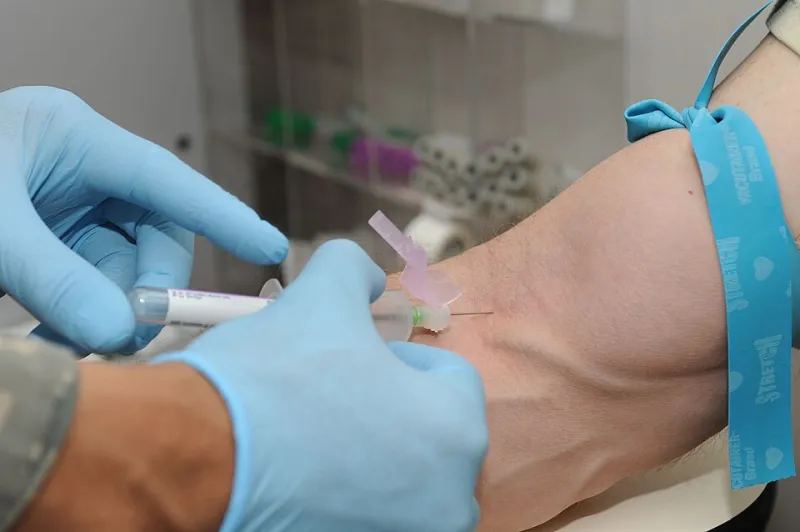
Photo: U.S. Navy photo by Petty Officer 2nd Class Jonas Womack, Public domain, via Wikimedia Commons
Few conversations in a physician's office produce more confusion than the one where a doctor recommends increasing a patient's prednisone dose as part of a plan to eventually take less of it. For patients who have spent months — sometimes years — hoping to reduce their corticosteroid burden, hearing the words "we're going to go up first" can feel like a step in the wrong direction. It is not. In many clinical situations, it is the most direct route forward.
This article explains why, drawing on the physiological realities of corticosteroid therapy and the practical challenges that make straightforward tapering harder than it sounds.
Why Tapering Is Rarely Simple
Prednisone is a synthetic corticosteroid that mimics cortisol, a hormone the adrenal glands produce naturally. When the body receives prednisone consistently — even at moderate doses — the adrenal glands begin to scale back their own production. The hypothalamic-pituitary-adrenal (HPA) axis, which governs this process, essentially interprets the external supply of corticosteroid as a signal that less internal production is needed.
The longer a patient has been on prednisone, and the higher the dose, the more pronounced this suppression tends to be. When a taper is attempted under these conditions, the body may not be capable of generating enough cortisol on its own to compensate for the reduction — a state known as adrenal insufficiency. Symptoms can include profound fatigue, nausea, dizziness, muscle weakness, and in severe cases, a life-threatening adrenal crisis.
But adrenal suppression is only part of the challenge. The underlying disease being treated — whether that is an autoimmune condition, a severe inflammatory disorder, or a chronic respiratory illness — may itself be incompletely controlled. Attempting to taper from an unstable disease baseline is a common reason tapers fail, triggering flares that force physicians to return to higher doses anyway.
The Stabilization Principle
This is where the counterintuitive logic of dose escalation enters the picture. When a patient's condition is insufficiently controlled at their current dose, and previous attempts to taper have repeatedly failed, some physicians will recommend a deliberate, temporary increase — sometimes called a "burst" — before attempting a more structured, gradual reduction.
The goal is stabilization. By bringing the underlying condition into a state of genuine remission or near-remission, the body is placed on firmer ground from which a taper can proceed. Rather than asking the immune system to tolerate less corticosteroid while it is still actively inflamed, the strategy quiets the inflammation first, then reduces the drug incrementally from a position of relative physiological calm.
Think of it as clearing a path before attempting to walk it. Trying to taper through active disease activity is like navigating an obstacle course; tapering from a stabilized baseline is a far more navigable route.
What This Looks Like in Practice
The specifics vary considerably depending on the patient's diagnosis, their history with corticosteroids, and how their HPA axis has responded to therapy. In general terms, a physician may raise the dose to a level known to suppress the patient's disease activity reliably — often for a period of days to a few weeks — before initiating a structured taper.
That taper is then executed slowly and deliberately. Rather than large, rapid reductions, many protocols favor small decrements at regular intervals, giving the adrenal glands time to resume their own cortisol production gradually. Some patients require additional monitoring during this phase, including morning cortisol blood tests or stimulation tests to assess how well the adrenal glands are recovering.
In certain autoimmune conditions, such as lupus, vasculitis, or polymyalgia rheumatica, disease activity itself is closely monitored alongside the taper. If inflammatory markers begin to rise or symptoms re-emerge, the taper may be paused or modestly adjusted — not abandoned entirely, but recalibrated.
Addressing the Understandable Fear
For patients, the psychological weight of a dose increase is real and should not be dismissed. Many individuals have worked hard to reduce their prednisone over time, and a recommendation to go back up — even temporarily — can feel like failure. It is not.
What it represents is a physician's recognition that the taper pathway requires a stronger foundation. Long-term independence from prednisone, or a significantly reduced maintenance dose, is a more realistic outcome when the underlying condition is first brought under firm control. A short-term increase in the service of a long-term reduction is a clinical trade-off that, when appropriately managed, tends to favor the patient.
It is also worth noting that the risks associated with corticosteroid therapy are cumulative and dose-dependent over time. A brief escalation followed by a successful, sustained taper may ultimately result in a lower total corticosteroid exposure than a series of failed tapers that repeatedly return the patient to their original dose — or higher.
Questions Worth Asking Your Physician
If your doctor has suggested raising your prednisone dose before attempting a taper, the following questions can help you understand and engage with the plan:
- What is the target stabilization dose, and how long do you expect to maintain it before beginning the taper?
- What specific signs of disease control are you looking for before we start reducing?
- What is the planned taper schedule — how much will we reduce, and how often?
- Will we be monitoring my adrenal function during the taper?
- What symptoms should prompt me to contact you, and under what circumstances would we pause or adjust the taper?
- What is the realistic timeline for reaching my target dose or discontinuing prednisone altogether?
These are not questions that challenge your physician's judgment — they are the questions of an informed patient who is actively participating in their own care.
A Different Way to Think About Progress
Progress in corticosteroid therapy is not always a straight line downward on the dose chart. For many patients, the path to less prednisone runs through a period of more — not because the situation is worsening, but because genuine stabilization requires it.
Understanding the physiological reasoning behind this approach does not make the process easier emotionally, but it does make it less frightening. When a temporary increase is part of a deliberate, monitored clinical strategy aimed at long-term reduction, it is a sign that your physician is thinking carefully about your trajectory — not simply reacting to symptoms in the moment.
At PrednisoneMD, we believe that patients who understand why their treatment is structured the way it is are better equipped to follow through, communicate with their care team, and ultimately achieve the outcomes they are working toward. A dose increase is not the end of the road. For many patients, it is the beginning of the exit ramp.