When the Numbers Say Fine but Your Body Says Otherwise: Decoding the Lab Test Gap on Prednisone
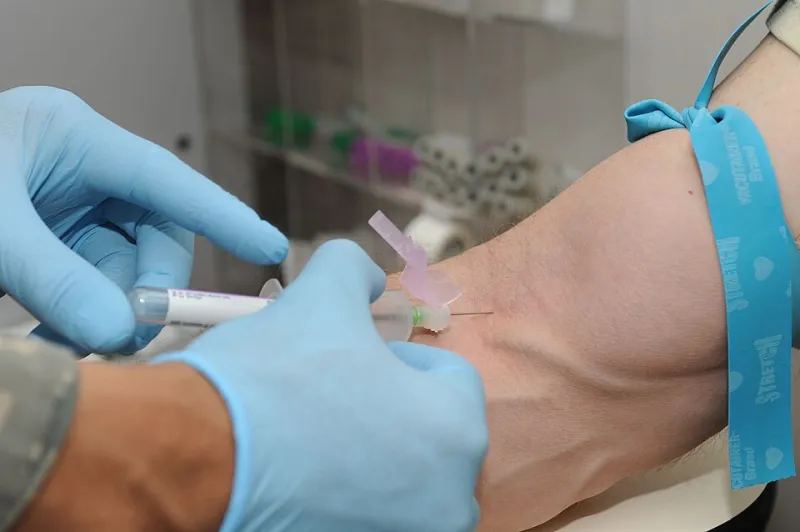
Photo: Staff Sgt. Stephanie Rubi, U.S. Air Force, Public domain, via Wikimedia Commons
You sit across from your physician, bracing yourself for answers. The fatigue has been relentless. Your joints still ache. You feel hollowed out in ways that are difficult to articulate. And then comes the phrase that many prednisone patients have heard more than once: Your labs look completely normal.
For patients navigating long-term or high-dose corticosteroid therapy, this moment can be deeply frustrating — even isolating. If everything appears fine on paper, why does your body feel like it is staging a quiet revolt? The answer lies not in your imagination, but in the fundamental limitations of standard diagnostic testing when applied to the complex biochemical environment that prednisone creates.
What Standard Lab Work Is Actually Measuring
A typical comprehensive metabolic panel or complete blood count is an excellent tool for detecting a wide range of acute and chronic conditions. It can flag kidney dysfunction, liver stress, anemia, infection, and electrolyte imbalances — all of which prednisone can influence in measurable ways at certain doses or durations.
However, these panels were developed to assess baseline organ function and gross physiological disruption. They were not engineered to detect the subtler, systemic shifts that corticosteroids produce at the cellular and hormonal level. When a physician reviews your results and sees values within the reference range, they are confirming that your organs are not in immediate crisis — not that your body is functioning optimally.
This distinction matters enormously for patients on prednisone.
The Cortisol Suppression Problem Nobody Talks About
Prednisone works by mimicking the effects of cortisol, the body's endogenous stress hormone. When synthetic corticosteroids are introduced, the hypothalamic-pituitary-adrenal (HPA) axis — the feedback loop responsible for regulating your body's own cortisol production — receives a signal to stand down. Over time, the adrenal glands may reduce or nearly cease their natural output.
Here is where standard lab work falls short. A routine cortisol level drawn in a clinical setting can appear entirely unremarkable, or may not be ordered at all. What it often fails to capture is the functional state of adrenal suppression: the degree to which your body can no longer mount an appropriate stress response on its own. Patients experiencing adrenal insufficiency may have fatigue, dizziness, and a general sense of being unwell that simply does not register in a basic metabolic panel.
The appropriate test for this — a morning cortisol draw or a stimulation test such as the ACTH stimulation test — requires deliberate clinical judgment to order. Many patients are never offered it.
Inflammation Markers: A Deceptive Silence
Prednisone is prescribed precisely because of its powerful anti-inflammatory properties. This means that while you are taking it, markers such as C-reactive protein (CRP) and erythrocyte sedimentation rate (ESR) will often be suppressed — sometimes to levels that appear entirely healthy.
For a physician reviewing your chart, this can look like a treatment success. For the patient, it can mean that the underlying disease driving the original inflammation is still active beneath the surface, masked by corticosteroid suppression rather than genuinely controlled. When prednisone is tapered or discontinued, that inflammation frequently returns — sometimes with intensity.
The takeaway is not that your doctor is misreading your results. It is that inflammation markers on prednisone require careful clinical interpretation rather than face-value reassurance.
Glucose, Bone Density, and the Slow Accumulation of Harm
Prednisone is well-documented to raise blood glucose levels, sometimes substantially. Yet a fasting glucose or even a hemoglobin A1c can fall within the normal range for months before corticosteroid-induced diabetes becomes apparent — particularly if the patient's baseline was already on the higher end of normal before therapy began.
Similarly, bone density loss from long-term corticosteroid use progresses silently. Routine blood work will not reveal it. A DEXA scan is required, and current clinical guidelines recommend that patients on prednisone at doses of 7.5 mg or more daily for three months or longer receive baseline and follow-up bone density assessments. Many patients are not informed of this recommendation until damage has already accumulated.
Muscle wasting — a known consequence of prolonged corticosteroid use — is another condition that standard labs handle poorly. Creatinine levels may actually appear low in patients losing muscle mass, which can paradoxically make kidney function appear better than it is, further obscuring the clinical picture.
The Symptom Burden That Falls Between the Lines
Patients on prednisone frequently report a constellation of experiences that are genuinely difficult to quantify: mood instability, cognitive sluggishness, disrupted sleep architecture, skin fragility, and a pervasive sense of physical depletion. These are not fabricated complaints. They are well-recognized corticosteroid effects that exist in a space standard lab panels were never designed to address.
Neuropsychiatric effects of prednisone, for instance, involve changes in neurotransmitter activity and hippocampal function that no blood draw will detect. Sleep disruption tied to corticosteroid-induced alterations in the circadian release of cortisol analogs does not appear on a metabolic panel. Fatigue rooted in HPA axis suppression may not produce any single abnormal value — yet can be profoundly disabling.
This does not mean these symptoms are untreatable or unaddressable. It means that addressing them requires a physician willing to look beyond the numbers.
What Patients Can and Should Ask For
If you are on prednisone and experiencing symptoms that your routine lab work does not explain, consider raising the following with your prescribing physician or specialist:
- A morning cortisol level or formal adrenal function testing, particularly if you have been on prednisone for more than a few weeks or are in the process of tapering
- A DEXA scan to establish a baseline for bone density, or to monitor ongoing changes
- Fasting glucose and hemoglobin A1c reviewed in the context of your corticosteroid dose, not just against population reference ranges
- Potassium and magnesium levels, which prednisone can deplete in ways that contribute to fatigue and muscle weakness
- A frank conversation about symptom burden that goes beyond organ function — including sleep quality, mood, cognitive function, and energy levels
You are not obligated to accept a normal lab result as the end of the diagnostic conversation. Standard reference ranges were built on populations that were not taking immunosuppressive corticosteroids, and applying them without adjustment to your situation may leave meaningful clinical information on the table.
Advocating for a More Complete Picture
Physicians who specialize in conditions requiring long-term corticosteroid therapy — rheumatologists, pulmonologists, endocrinologists — are often better equipped to interpret lab results within the specific context of prednisone use. If your primary care provider is the only clinician reviewing your results, it may be worth requesting a referral or a second opinion from a specialist familiar with the nuances of corticosteroid pharmacology.
Keeping a detailed symptom journal between appointments can also help. When you arrive at a visit with documented patterns — not just a general sense of feeling unwell — you give your physician something concrete to work with, and you make it harder for subjective experiences to be dismissed as outside the scope of your bloodwork.
The gap between what your lab results show and what your body is telling you is real. It is not a failure of medicine, but it is a limitation that patients deserve to understand — and to push past, with the support of clinicians who take the full picture seriously.