Feeling Better Is Not the Same as Being Better: The Hidden Risks of Stopping Prednisone Too Soon
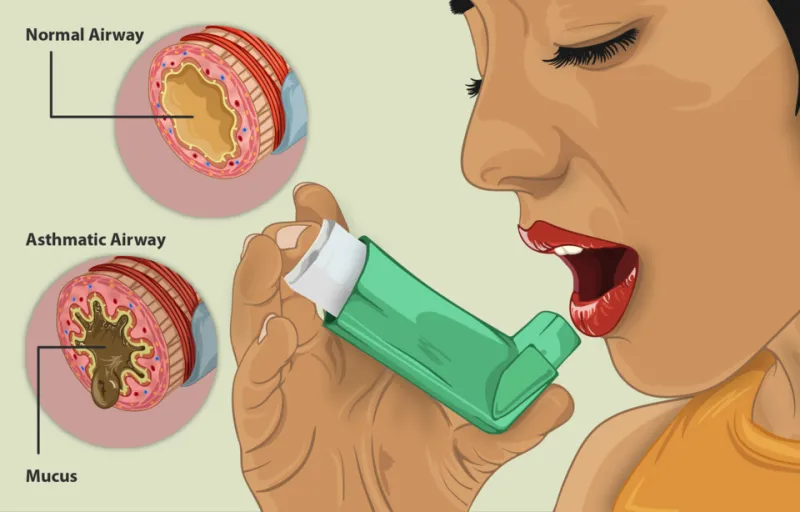
Photo: https://www.myupchar.com/en, CC BY-SA 4.0, via Wikimedia Commons
For many patients, the experience of starting prednisone is almost startling in its speed. Joint pain that made walking difficult begins to ease. Breathing that felt labored becomes effortless again. Inflammation that had been building for weeks seems to retreat almost overnight. Within 48 to 72 hours, it is not uncommon for patients to feel, in their own words, "like a different person."
That rapid turnaround is one of prednisone's most clinically valuable properties. It is also one of its most misunderstood.
The relief you feel in those first few days is real. But it is not the same thing as recovery. And acting on that feeling — by skipping doses, tapering faster than prescribed, or stopping the medication altogether — can undo the progress your body has made and, in some cases, trigger a response far worse than what you started with.
What Prednisone Is Actually Doing in Your Body
To understand why symptom relief arrives so quickly, it helps to understand what prednisone is doing at a biological level. As a synthetic corticosteroid, prednisone mimics the action of cortisol, a hormone your adrenal glands produce naturally. When it enters your system, it suppresses the immune response that drives inflammation — essentially turning down the volume on a signal that has become too loud.
This suppression happens rapidly. Inflammatory cytokines — the molecular messengers that cause swelling, pain, and tissue damage — begin to decrease within hours of your first dose. That is why you feel better so quickly.
But here is the critical distinction: suppressing inflammation is not the same as resolving the underlying condition. The autoimmune activity, the infection, the allergic response, or whatever process triggered the inflammation in the first place may still be very much active. Prednisone is managing the fire's heat, not putting out the fire itself.
The Biology of a Rebound Flare
When patients stop prednisone abruptly or taper too aggressively, the inflammatory machinery that was being held in check can reassert itself — sometimes with greater intensity than before.
This phenomenon, commonly referred to as a rebound flare, occurs for two interconnected reasons.
First, the underlying condition driving the inflammation has not been fully treated. The immune system, no longer suppressed by exogenous corticosteroids, resumes its dysregulated activity.
Second, and equally important, prolonged use of prednisone suppresses the body's own cortisol production. The hypothalamic-pituitary-adrenal (HPA) axis — the feedback loop that regulates your natural steroid output — essentially goes quiet when it detects that synthetic corticosteroids are present. When prednisone is removed too quickly, the adrenal glands may not be ready to resume normal cortisol production. This can lead to a condition called adrenal insufficiency, which carries its own serious risks, including extreme fatigue, low blood pressure, nausea, and in severe cases, an adrenal crisis that requires emergency medical attention.
Rebound flares and adrenal insufficiency are not rare edge cases. They are well-documented, clinically recognized outcomes of premature discontinuation — and they are precisely why your physician prescribed a tapering schedule rather than a fixed end date.
Why the Tapering Schedule Is Not Optional
A prednisone taper is not a formality. It is a carefully calculated clinical strategy designed to give two things time to recover: the condition being treated, and your adrenal function.
Your physician determines your taper based on several factors: the condition being treated, the dose you started on, how long you have been taking the medication, and how your body has responded. A patient on a five-day burst dose for an acute allergic reaction may be able to stop without tapering. A patient who has been on 20 mg daily for six weeks requires a much more gradual reduction.
Deviating from that schedule — even with the best intentions — introduces variables your prescriber did not account for. If you feel well enough to stop at day ten of a twenty-day taper, that feeling is not clinical evidence that you are ready to stop. It is evidence that the medication is working as intended.
The Symptom Gap: What Patients Feel vs. What Is Happening
Physicians who treat chronic inflammatory conditions frequently describe what might be called a "symptom gap" — the period during which a patient's subjective experience of wellness diverges significantly from their objective disease status.
This gap is especially pronounced with conditions like rheumatoid arthritis, lupus, inflammatory bowel disease, and certain respiratory conditions. A patient with lupus nephritis, for example, may feel entirely well while their kidneys are still sustaining measurable inflammatory damage. A patient with Crohn's disease may have no pain while mucosal healing remains incomplete.
Prognosis and long-term outcomes in these conditions depend not on how quickly symptoms resolve, but on whether the underlying inflammatory process is brought under sufficient control for a long enough duration. Stopping prednisone when you feel better — rather than when your physician determines the treatment course is complete — may sacrifice that deeper, durable resolution.
Practical Guidance for Patients
If you are currently on a prednisone regimen and feeling significantly better, that is genuinely good news. It means the medication is doing its job. Here is how to protect that progress:
Follow your tapering schedule exactly as written. If you have questions about a particular step in the taper, call your prescriber's office before making any changes — not after.
Do not interpret symptom relief as permission to adjust your dose. The relationship between how you feel and what your body needs is not linear during corticosteroid treatment.
Communicate side effects rather than self-adjusting. If you are experiencing side effects that feel unmanageable — insomnia, mood changes, elevated blood sugar — your prescriber may be able to modify the taper in a medically appropriate way. That is a conversation to have with your care team, not a decision to make independently.
Know the signs of adrenal insufficiency. If you have recently stopped or significantly reduced prednisone and you experience unusual fatigue, dizziness when standing, nausea, or weakness, contact your physician promptly. These symptoms warrant evaluation.
Keep your follow-up appointments. Many prescribers use lab work or clinical assessments at key points during a taper to verify that the underlying condition is responding appropriately. These checkpoints exist for a reason.
A Note on the Temptation to Stop
It is worth acknowledging that the desire to stop prednisone is entirely understandable. Corticosteroids carry real side effects, and many patients are eager to be free of them. That motivation is not misplaced — minimizing exposure to prednisone is a legitimate clinical goal that your physician shares.
But the path to safely stopping prednisone runs through the taper, not around it. The short-term discomfort of continuing a medication you feel you no longer need is almost always preferable to the consequences of a rebound flare or an adrenal crisis.
Feeling better is a milestone worth recognizing. It is not, however, a finish line.
The information provided in this article is intended for general educational purposes and does not constitute medical advice. Always consult your prescribing physician before making any changes to your prednisone regimen.